10 Best 4WD Tracks in Australia for 2026
Australia has some of the best 4WD tracks on the planet. From remote desert crossings to tropical river crossings, from alpine mountain passes to ancient gorge country, there's a track for every skill level and every type of adventure. Make sure you've ticked off every item on our camping checklist before heading bush.
We've driven all ten of these tracks personally, some of them multiple times. This isn't a list assembled from Google — it's built on dirt under our tyres, river crossings waded, and campsites discovered.
4WD touring in remote Australia requires serious preparation. Never attempt remote tracks without recovery gear, adequate water (minimum 10L per person per day), a UHF radio, satellite communicator, and a well-maintained vehicle. Let someone know your plans and expected return date. These tracks can be genuinely dangerous without proper preparation.
The Legendary Tracks
1. Gibb River Road, Western Australia
Distance: 660 km (Kununurra to Derby) | Difficulty: Moderate | Time: 5-7 days minimum
The Gibb River Road is Australia's most iconic 4WD adventure and it deserves every bit of hype. Cutting through the heart of the Kimberley, it connects a series of ancient gorges, waterfalls, and swimming holes that rank among the most beautiful natural places on earth.
The track itself ranges from well-graded dirt highway to corrugated bone-shaker, with several river crossings that can range from ankle-deep in the dry season to impassable in the wet. The Pentecost River crossing is the most photographed — and for good reason. Saltwater crocodiles inhabit this river, so don't swim here.
Must-stop highlights: El Questro Gorge, Manning Gorge (swim across to reach the falls), Bell Gorge (arguably Australia's most beautiful waterfall), and Windjana Gorge for its freshwater crocodiles and ancient Devonian reef walls.
A 12V fridge is essential for the Gibb — you won't find cold drinks for sale between roadhouses, and the heat demands cold water and fresh food storage.
Best time: May to September (dry season). The road closes during the wet season and conditions in shoulder months can be unpredictable.
2. Simpson Desert Crossing, SA/QLD/NT
Distance: ~550 km (Dalhousie Springs to Birdsville) | Difficulty: Hard | Time: 3-5 days
Crossing the Simpson Desert is a bucket-list adventure that every serious 4WD tourer should experience at least once. The track crosses over 1,100 parallel sand dunes running north-south — including Big Red, the famous 40-metre dune on the edge of Birdsville.
This is genuine remote desert driving. The nearest mechanical help is days away. You need to be completely self-sufficient with fuel, water, food, and proper recovery gear. Tyre pressures, momentum, and reading the sand are essential skills.
MAXTRAX recovery boards are non-negotiable for dune crossings — you'll use them multiple times per day on the French Line.
Preparation: Carry minimum 400km of extra fuel range. You'll need a Desert Parks Pass from the SA government. Register your trip with police in both Birdsville and Oodnadatta. Travel in a convoy of at least two vehicles.
Best time: April to September. Summer temperatures exceed 50°C and the track is closed.
The French Line is the most popular crossing route with around 1,100 dune crossings. The Rig Road runs north-south along the oil exploration track and avoids most dunes — useful as a bailout route but not the "real" crossing experience.
3. Canning Stock Route, Western Australia
Distance: 1,850 km (Halls Creek to Wiluna) | Difficulty: Extreme | Time: 14-21 days
Australia's toughest and most remote 4WD track. The Canning Stock Route traverses four deserts across 1,850 km of some of the most isolated country on earth. Originally built in 1910 to drive cattle from the Kimberley to the goldfields, it's now the ultimate test of 4WD touring capability.
This track requires months of preparation, a heavily modified and well-equipped vehicle, and preferably a convoy. The 52 wells along the route are historic landmarks but should never be relied upon for water. You must carry all water, fuel, and food for the entire journey.
Not for beginners. This track claims vehicles every season. Satellite communication is essential — there is zero mobile phone coverage for the entire route.
Classic Touring Tracks
4. Victorian High Country, Victoria
Distance: Multiple tracks, 200-500 km depending on route | Difficulty: Easy to Hard | Time: 2-5 days
The Victorian High Country offers the best 4WD touring within easy reach of Melbourne. The network of tracks through the alpine region includes everything from gentle forest roads to seriously challenging mountain climbs.
Billy Goats Bluff, Blue Rag Range, and the Wonnangatta Valley are the standout drives. The scenery shifts between towering mountain ash forest, open alpine meadows, and historic mining settlements. In winter, the higher tracks are snow-covered and inaccessible — which makes them particularly beautiful in autumn and spring.
Must-do: The run from Dargo to Licola via the Wonnangatta Valley is one of the finest 4WD day drives in Australia. Camp at Wonnangatta Station (free camping) for the full experience — it's one of Victoria's best camping spots.
Best time: November to May (weather dependent, check track conditions).
5. Fraser Island (K'gari), Queensland
Distance: ~120 km of beach driving plus inland tracks | Difficulty: Moderate | Time: 3-5 days
The world's largest sand island is a 4WD playground. 75-Mile Beach is a designated highway where you drive on the sand at low tide, dodging waves and aircraft landing on the beach. Inland, the sandy tracks weave through ancient rainforest growing directly from sand.
Lake McKenzie's crystal-clear water, the coloured sand cliffs at The Pinnacles, and the SS Maheno shipwreck are the headline attractions. But it's the act of driving the beach itself — with the ocean on one side and towering sand dunes on the other — that makes K'gari special.
Tide awareness is critical. Study the tide charts before driving the beach. Getting caught between the surf and soft sand at high tide is the most common way people damage vehicles on K'gari.
Like this guide? Get more every Friday.
Join 5,000+ outdoor enthusiasts.
6. Flinders Ranges, South Australia
Distance: Various tracks, 300-600 km loop | Difficulty: Easy to Moderate | Time: 3-5 days
The Flinders Ranges offer accessible 4WD touring through some of Australia's most ancient and dramatic landscapes. Wilpena Pound — a natural amphitheatre 17 km long — is the centrepiece, but the real gems are found on the rougher tracks north of Blinman.
The Arkaroola Ridgetop Tour is a must-do: a guided 4WD track along narrow ridgelines with 360-degree views across the northern Flinders. Arkaroola is also a designated Dark Sky sanctuary, making it one of the best stargazing locations in Australia.
Best time: April to October. Summer temperatures regularly exceed 45°C in the northern Flinders.
7. Cape York Peninsula, Queensland
Distance: ~950 km (Cairns to the Tip) | Difficulty: Hard | Time: 7-10 days
The pilgrimage to the northernmost point of mainland Australia is one of the great Australian road trips. The journey from Cairns to the Tip of Cape York follows the historic Telegraph Track through tropical savannah, river crossings, and remote Aboriginal communities.
The river crossings are the defining challenge. The Jardine, Wenlock, and Gunshot Creek crossings range from straightforward to genuinely sketchy depending on water levels. Crocodiles inhabit most waterways — never swim in rivers north of Cooktown.
Best time: June to October (dry season only). The track is impassable in the wet season and crocodile risk increases with rising water levels.
Emerging & Underrated Tracks
8. Madigan Line, Simpson Desert
Distance: ~800 km | Difficulty: Extreme | Time: 7-10 days
The lesser-known alternative to the standard Simpson crossing. Following the route of Cecil Madigan's 1939 expedition, this track runs east-west through the northern Simpson — encountering larger and more challenging dunes than the French Line. Genuine expedition-grade touring.
9. Holland Track, Western Australia
Distance: 350 km (Hyden to Coolgardie) | Difficulty: Moderate | Time: 2-3 days
One of WA's best-kept secrets. This historic track follows the 1893 route that John Holland cut through the bush to reach the goldfields. It passes through beautiful woodland and granite outcrop country that few tourists ever see.
10. Plenty Highway, NT/SA
Distance: 740 km (Stuart Highway to Oodnadatta) | Difficulty: Moderate | Time: 2-3 days
A red-dirt highway through the heart of Australia connecting Alice Springs to the Oodnadatta Track. The remoteness is the attraction — vast gibber plains, distant mesas, and the overwhelming sense of space that only Central Australia can deliver.
Essential 4WD Preparation
Before attempting any remote track, ensure you have:
- Recovery gear: Snatch strap, rated shackles, MAXTRAX MKII recovery boards, and a high-lift jack
- Communication: UHF radio and satellite communicator (Garmin inReach or similar)
- Navigation: Up-to-date paper maps and a GPS with offline topo maps
- Water: Minimum 10L per person per day plus a 20L reserve
- Fuel: Calculate range carefully and carry jerry cans for extra capacity
- Power: Portable solar panels to keep batteries charged — essential for multi-week trips where you're camping away from mains power
- Spares: Two spare tyres, fan belts, radiator hoses, fuses, and basic tools
Frequently Asked Questions
What modifications do I need for remote 4WD touring?
Can I do these tracks in a stock 4WD?
Do I need to travel in a convoy?
What's the best beginner 4WD track?
Written by
Adam La Cioppa
Lifelong 4WD tourer and van lifer who has explored Australia from coast to outback. Sharing real-world gear advice from the road.
You Might Also Like
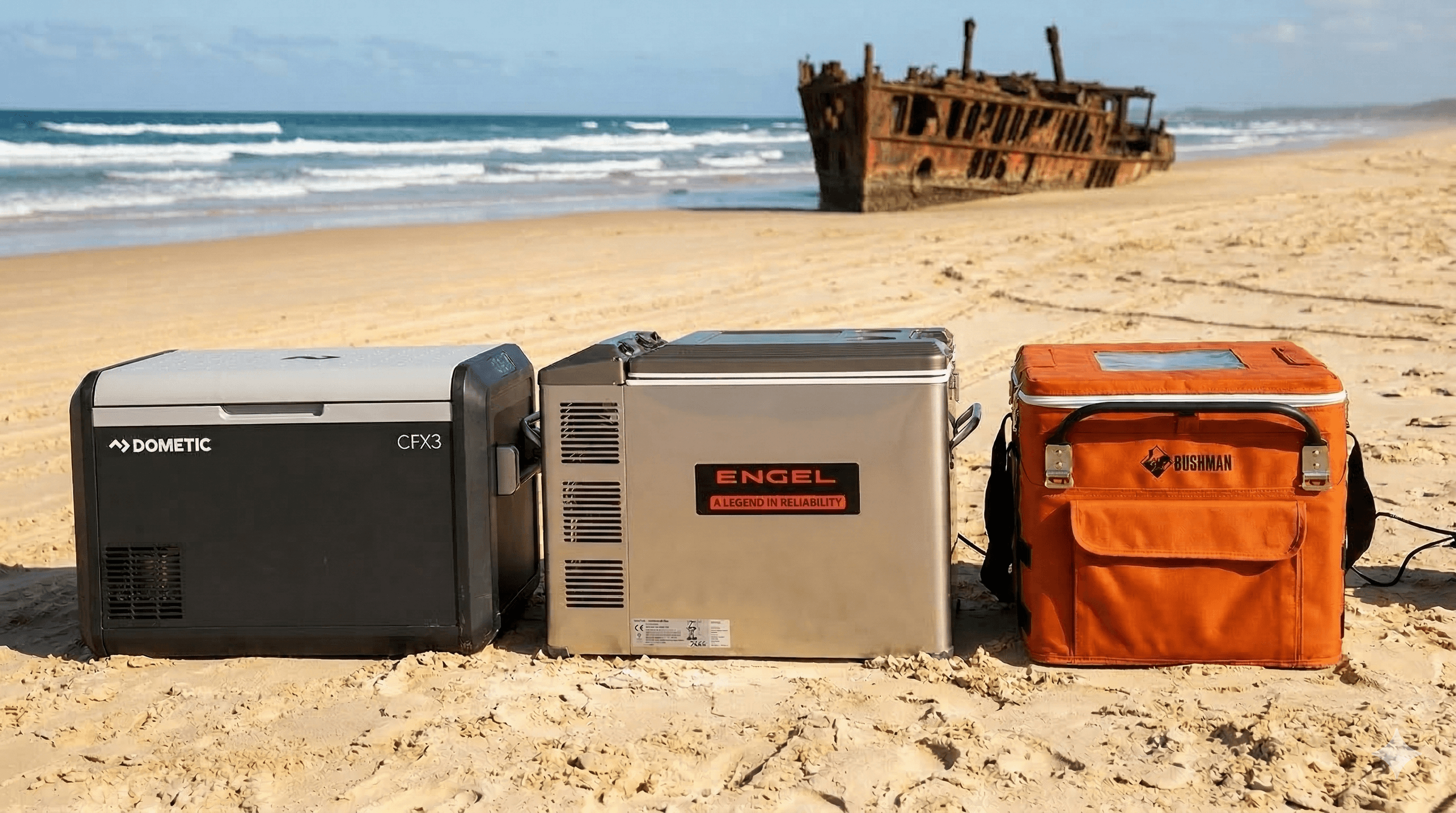
Best 12V Fridges Australia 2026: Tested & Rated
We tested 8 portable 12V fridges in Australian outback heat. Our honest picks for camping, 4WD touring, and van life after months of real-world testing.
The Ultimate Australian Camping Checklist for 2026
A comprehensive, printable camping checklist for Australia — shelter, cooking, safety and more. Built from 200+ nights of real camping experience.