The Ultimate Australian Camping Checklist for 2026
After 200+ nights camping across Australia, we've learned the hard way what you actually need — and what just takes up space. This checklist is the distilled result of years of overpacking, underpacking, and everything in between.
We've organised it by category so you can quickly scan through and make sure you haven't forgotten anything critical. The checklist scales from weekend car camping to extended 4WD touring.
Save this page to your phone for quick reference before each trip. We update it regularly based on gear testing and reader feedback.
Shelter & Sleeping
The foundation of a good camping trip. Get these wrong and everything else suffers.
- Tent or swag — sized for your group plus gear storage
- Groundsheet or tarp — protects your tent floor and extends your living area
- Sleeping bag — rated to 5°C below your expected overnight minimum
- Sleeping mat or camp bed — insulated mat for cold ground, camp stretcher for comfort
- Rooftop tent — if you're 4WD touring, a rooftop tent is the ultimate quick-setup shelter
- Pillow — a compressible camping pillow or just stuff a jacket into a dry bag
- Extra tarp — for shade, rain protection over the camp kitchen, or emergency shelter
- Tent pegs (spare set) — sand pegs for beaches, rock pegs for hard ground
- Mallet or hammer — for driving pegs into hard ground
Always check your tent or swag at home before every trip. Zippers fail, mice chew through canvas in storage, and poles get bent. Finding a broken zipper at 10pm in the dark with rain approaching is not fun. Ask us how we know.
Camp Kitchen & Cooking
Camp cooking is half the fun. Don't cheap out on your kitchen setup.
- Camp stove — dual-burner gas stove for car camping, single-burner for hiking
- Gas bottles/canisters — always carry a spare
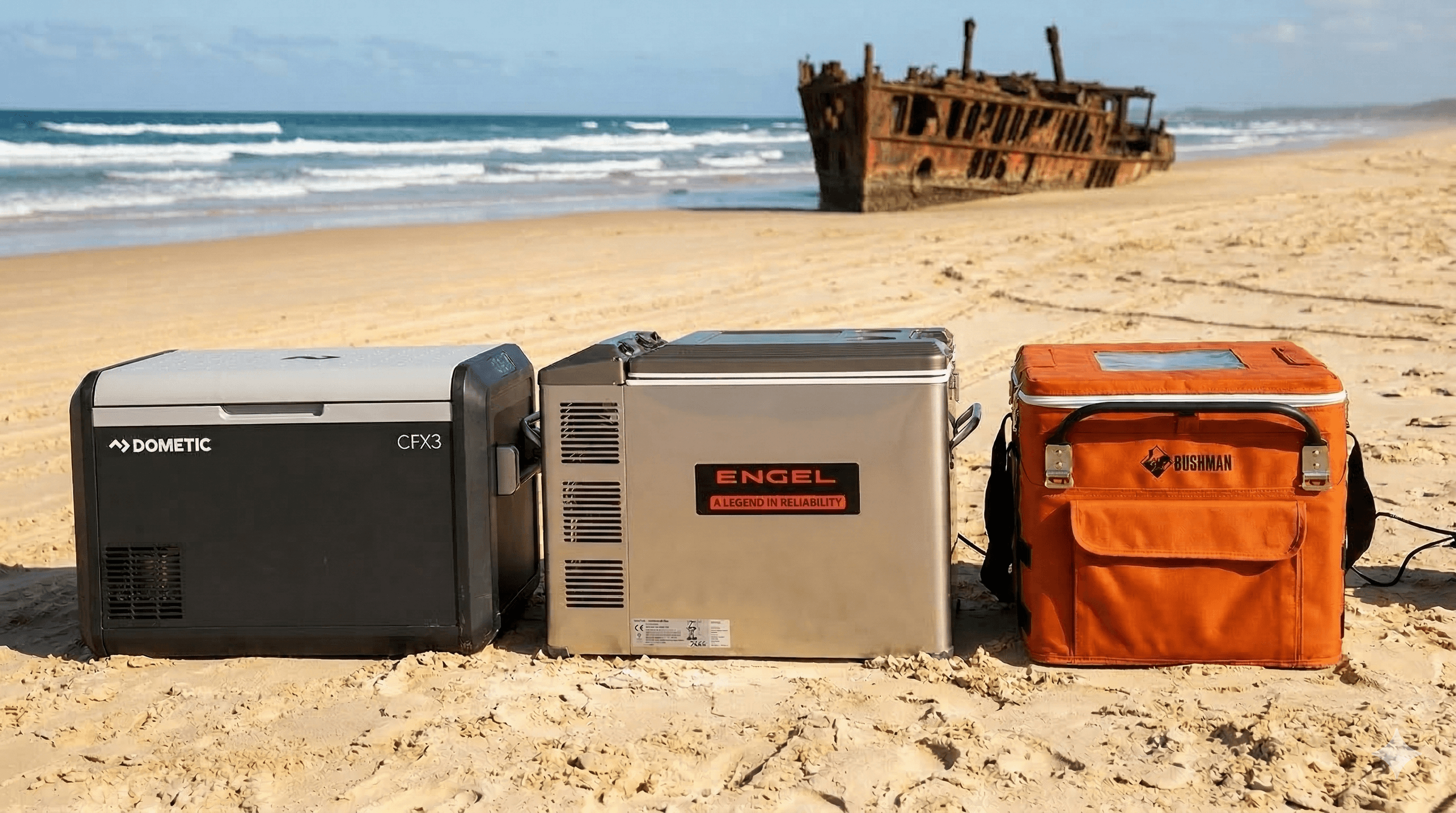
- 12V fridge or quality cooler — a proper fridge changes everything
- Pots and pans — one large pot, one frying pan minimum
- Plates, bowls, cups — enamel or BPA-free plastic (avoid glass)
- Cutlery set — including a sharp knife, tongs, and a spatula
- Cutting board — a flexible silicone one packs flat
- Kettle — for camp coffee and tea (non-negotiable)
- Washing up gear — biodegradable soap, sponge, collapsible bucket
- Bin bags — heavy duty, for all rubbish (leave no trace)
- Paper towel — endlessly useful
- Aluminium foil — for wrapping food, cooking on coals, windshield for stove
- Food storage containers — airtight to keep ants and critters out
- Spice kit — salt, pepper, garlic powder, chilli flakes in small containers
- Oil/butter — in leak-proof containers
- Can opener & bottle opener — the universal camping tools
- Coffee setup — Aeropress, plunger, or whatever keeps you human in the morning
- Portable solar panel — keeps your fridge and devices charged when camping off-grid for multiple days
Pre-prepare meals at home and freeze them in zip-lock bags. They act as ice blocks in your fridge/cooler on day one, then thaw into ready-to-heat meals for nights two and three. Game changer for weeknight dinners after a long day exploring.
Clothing
Pack for the conditions, not the forecast. Australian weather can change fast.
- Base layers — merino wool for cold weather (avoid cotton, it stays wet)
- Mid layers — fleece or insulated jacket
- Rain jacket — lightweight and packable, always have one
- Wide-brim hat — sun protection is essential in Australia
- Beanie — temperatures drop fast at night, even in summer
- Sturdy footwear — boots for hiking, thongs/sandals for camp
- Extra socks — more than you think you'll need
- Swimmers — you'll always find water worth swimming in
- Quick-dry towel — microfibre packs small
Safety & First Aid
The stuff you hope you don't need but must always have.
- First aid kit — stocked and checked before each trip
- Snake bandage — pressure immobilisation bandages (this is Australia)
- Sunscreen — SPF 50+, apply and reapply
- Insect repellent — tropical strength for northern Australia
- Head torch — with fresh batteries (plus spares)
- Fire extinguisher — if you're having campfires or cooking with gas
- Emergency whistle — three blasts is the universal distress signal
- UHF radio — essential for remote areas without phone signal
- Phone charger / power bank — keep your phone alive for emergencies
- Personal medications — plus antihistamines, ibuprofen, and gastro medication
Mobile phone coverage in regional and remote Australia is extremely patchy. A UHF radio (channel 40 for road use) and/or a satellite communicator (like a Garmin inReach) is essential if you're heading off the beaten track. Don't rely on your phone for emergency communication in the bush.
Vehicle & 4WD Gear
Essential for anyone driving to their campsite — doubly important for 4WD touring.
- Recovery gear — snatch strap, shackles, gloves (for 4WD tracks)
- Tyre repair kit — plug kit and 12V compressor minimum
- Tyre pressure gauge — critical for airing down on sand and corrugated roads
- Spare tyre — checked and properly inflated
- Jerry can (fuel) — calculate range carefully for remote areas
- Jerry can (water) — 10-20L of fresh water per person per day
- Jumper cables or jump starter — lithium jump starters are compact and reliable
- Basic tool kit — spanners, screwdrivers, pliers, zip ties, duct tape
- Tow rope — even for 2WD camping
- Satellite communicator — essential for remote areas without phone coverage. The Garmin inReach Mini 2 sends SOS and text messages via satellite
Comfort & Extras
The difference between surviving and enjoying your camping trip.
- Camp chairs — quality chairs with drink holders and good back support
- Camp table — folding table for cooking and eating
- Lighting — LED lantern for the camp, fairy lights for ambience
- Firewood — buy locally to prevent spreading pests and diseases
- Fire starter — matches/lighter plus firelighters (don't rely on rubbing sticks)
- Entertainment — cards, books, frisbee, fishing gear
- Camera — for capturing memories (your phone works, but a proper camera is better)
- Star chart or astronomy app — for identifying constellations
- Earplugs — for light sleepers (bush sounds can be surprisingly loud)
Like this guide? Get more every Friday.
Join 5,000+ outdoor enthusiasts.
Packing Tips From 200+ Nights Out
Use a packing system. We use colour-coded dry bags: blue for kitchen, green for bedding, red for safety, yellow for clothes. It sounds over-organised until you need to find the first aid kit at midnight.
Make a pre-trip checklist. Keep a running list on your phone that you update after each trip. Add things you forgot and remove things you never used. After 5-10 trips, your list will be perfectly dialled in.
Pack in reverse order. The last thing you'll need at camp goes in first. The first thing you'll need (usually chairs and a cold drink) goes in last.
Keep a "permanently packed" box. We keep a plastic tub in the garage with items that live there permanently: camp stove, first aid kit, cutlery set, fire starters, ropes, etc. When it's time to go camping, grab the box and you're halfway packed.
Frequently Asked Questions
How much water should I bring camping?
What food should I bring camping?
Do I need a 4WD to go camping in Australia?
Is it safe to camp in Australia?
Written by
Adam La Cioppa
Lifelong 4WD tourer and van lifer who has explored Australia from coast to outback. Sharing real-world gear advice from the road.
You Might Also Like
Best Swags Australia 2026: Our Top 5 Picks After Testing
We slept in 10 different swags across three seasons to find the best for every budget. From weekend warriors to serious tourers, our honest picks.
Best 12V Fridges Australia 2026: Tested & Rated
We tested 8 portable 12V fridges in Australian outback heat. Our honest picks for camping, 4WD touring, and van life after months of real-world testing.
10 Best 4WD Tracks in Australia for 2026
From the Gibb River Road to the Simpson Desert, these are Australia's best 4WD tracks. Difficulty ratings and tips from someone who's driven them all.