
Van Life Setup Guide Australia 2026: Everything You Need
Van life in Australia is the ultimate freedom — wake up to a different view every morning, travel at your own pace, and live with exactly what you need. But getting the setup right makes the difference between an incredible adventure and a frustrating experience.
After years of living and travelling in vans across Australia, here's everything you need to know about setting up for van life — from the vehicle choice to the critical systems that keep you comfortable on the road.
Choosing the Right Van
The vehicle is your foundation. Get this wrong and everything else becomes harder.
Best Van Options for Australia
Toyota HiAce (LWB) — The most popular van life vehicle in Australia. Reliable Toyota drivetrain, cheap to service anywhere, reasonable interior space, and excellent resale. Budget: $15,000-30,000 for a used model.
Mercedes Sprinter (LWB) — More interior space than a HiAce, higher roof means standing room, and available in 4WD. More expensive to buy and service. Budget: $25,000-50,000 used.
Mitsubishi Express / Hyundai iLoad — Budget-friendly alternatives. Smaller than a HiAce but cheaper to buy. Good for solo travellers or couples who travel light. Budget: $10,000-20,000 used.
4WD wagons (LandCruiser, Patrol, Pajero) — Not vans, but hugely popular for van life in Australia. Less living space but go-anywhere capability for remote areas. Budget: $15,000-40,000 used.
Buy the newest, lowest-kilometre van you can afford. Breakdowns in remote Australia are expensive and stressful. A mechanically sound vehicle is worth more than any fancy interior fitout. Get a pre-purchase inspection from an independent mechanic — budget $200-300 for a thorough check.
The Electrical System
Your electrical system powers everything — fridge, lights, phone charging, water pump, and fans. Getting this right is the most important part of any van build.
The Essential Setup
Battery: 200Ah lithium (LiFePO4) battery. Lithium is lighter, lasts longer, and handles deeper discharge than AGM. Budget: $800-1,200.
Solar: 200-300W of solar panels (fixed roof mount plus a portable panel). This keeps your battery topped up while parked. Budget: $400-800.
DC-DC charger: 30-40A DC-DC charger that charges your house battery from the alternator while driving. Essential for topping up on cloudy days or short stops. Budget: $250-400.
Inverter: 1,000-2,000W pure sine wave inverter for running 240V devices (laptop charger, blender, hair dryer). Budget: $200-400.
Wiring and fuses: Marine-grade cable, fuse box, bus bars, and battery monitor. Budget: $150-300.
Total Electrical Budget: $1,800-3,100
12V electrical work in a vehicle can cause fires if done incorrectly. Use appropriately rated cable for every circuit, install fuses at the battery, and never run cables through sharp metal without grommets. If you're not confident with electrical work, pay a qualified auto-electrician. A professional 12V install typically costs $1,500-3,000 including labour and materials.
The Kitchen Setup
Cooking in a van is one of the great pleasures of van life. A simple, functional kitchen makes you self-sufficient and saves thousands on eating out.
Kitchen Essentials
12V fridge: A 35-50L compressor fridge is non-negotiable. It keeps food cold indefinitely without ice. See our best 12V fridge reviews — the Bushman 35L ($1,289) or Dometic CFX3 55IM ($1,599) are our top picks.
Stove: A 2-burner gas camp stove (Camp Chef Everest 2X or similar) mounted inside the van or used as a pull-out. Connect to a 2 kg or 4 kg refillable gas bottle.
Water system: A 60-100L water tank with a 12V water pump and a small sink. Food-grade poly tanks from Clark Rubber or Bunnings work perfectly. A simple in-line water filter cleans the water as it flows.
Storage: Stackable containers, a small pantry section, and a slide-out drawer system for the fridge. Organisation is everything in a small space.
Kitchen Budget: $1,500-3,000
The Sleep Setup
Sleeping well in a van is critical for long-term travel. You need a proper bed — not an afterthought.
Bed Options
Fixed bed platform — The best option for comfort and convenience. A raised platform with a quality mattress that doesn't need to be folded away. It's always ready. Use the space underneath for storage.
Fold-out bed — Converts from a seating area to a bed. Saves space during the day but requires daily setup and packdown. Gets old quickly on longer trips.
Mattress: Don't skimp on the mattress. A 100-120mm high-density foam mattress custom-cut to your van dimensions is the minimum. Latex or memory foam toppers add comfort. Budget: $200-500 for a quality custom mattress.
Sleep Budget: $300-800
Ventilation
Ventilation is critical in Australia's climate. Without it, condensation builds up, the van gets unbearably hot, and mould becomes a problem.
Maxxfan or similar roof vent ($500-700) — a thermostatically controlled fan that exhausts hot air and pulls in fresh air. Can run while driving and in the rain. This is the single best quality-of-life investment in any van build.
Opening windows — Louvred windows or sliding windows on at least two sides allow cross-ventilation. Installation by a specialist costs $200-400 per window.
Ventilation Budget: $700-1,500
Storage and Organisation
Living in a small space demands organisation. Everything needs a place.
- Overhead shelving along the walls for books, clothes, and daily items
- Under-bed storage for tools, recovery gear, and bulk items
- Slide-out drawers for the kitchen and fridge area
- Hanging nets and pouches for phones, keys, and small items
- Roof rack for bulky items like solar panels, recovery boards, and a rooftop shower
Storage Budget: $300-800
Like this guide? Get more every Friday.
Join 5,000+ outdoor enthusiasts.
Total Van Life Setup Costs
| Component | Budget Range |
|---|---|
| Vehicle | $10,000 - $50,000 |
| Electrical system | $1,800 - $3,100 |
| Kitchen | $1,500 - $3,000 |
| Sleep setup | $300 - $800 |
| Ventilation | $700 - $1,500 |
| Storage | $300 - $800 |
| Registration + insurance | $800 - $1,500/year |
| Total (excl. vehicle) | $5,400 - $10,700 |
A basic but functional van life setup can be achieved for $5,000-6,000 on top of the vehicle cost. A more comfortable build with quality components runs $8,000-10,000. Professional builds by conversion companies start at $15,000-20,000.
Running Costs
Van life is cheaper than renting, but it's not free. Typical monthly costs for a couple travelling full-time:
- Fuel: $400-800 (depending on distances and fuel prices)
- Food: $400-600 (cooking in the van saves a lot)
- Camping fees: $0-300 (free camping to caravan parks)
- Vehicle maintenance: $100-200 (averaged over the year)
- Insurance + rego: $100-150 (averaged monthly)
- Phone/data: $50-80 (Telstra gives the best coverage in remote areas)
- Misc: $100-200
Total: approximately $1,200-2,300 per month for a couple.
The biggest variable is camping costs. If you free camp most nights (using apps like WikiCamps and CamperMate to find spots), you can keep this close to $0. If you use caravan parks for showers and laundry every few days, budget $150-300 per month.
Legal Considerations
Registration: Your van must be registered in the state you reside in. If you've modified the vehicle significantly (raised roof, changed suspension), you may need an engineer's certification.
Sleeping in your van: Laws vary by council. In most areas, sleeping in your van overnight in a car park or on a street is technically illegal but rarely enforced. Stick to designated camping areas, rest stops (where overnight stays are permitted), and free camps to avoid issues.
Gas installations: Any fixed gas installation (stove, hot water) in a vehicle must be certified by a licensed gas fitter and comply with AS/NZS 5601.2. This is a legal requirement and an insurance requirement.
Common Mistakes to Avoid
Overbuilding the interior. Keep it simple. Every kilo of cabinetry is a kilo of fuel consumption. Many first-time builders create elaborate interiors that they later strip out in favour of simpler, lighter setups.
Underestimating electrical needs. A 100Ah battery and 100W of solar is not enough for a fridge, lights, and regular phone/laptop charging. Go bigger on electrical from the start — upgrading later means rewiring everything.
Ignoring ventilation. A Maxxfan isn't optional in Australia. Without proper ventilation, condensation, heat, and mould will make your van unliveable within weeks.
No mechanical contingency fund. Keep $2,000-3,000 in reserve for unexpected repairs. A radiator, alternator, or clutch replacement in a remote town is expensive and unavoidable.
Verdict
Van life in Australia is achievable on almost any budget. If you're just starting out, our budget camping setup guide covers the essentials for under $1,000. The key is prioritising the systems that matter — electrical, fridge, and ventilation — and keeping the rest simple. Start basic, travel, and upgrade as you learn what you actually need. The road will teach you more than any guide.
Frequently Asked Questions
Is van life legal in Australia?
How do I get mail while living in a van?
What's the best phone plan for van life in Australia?
Do I need a shower in my van?
How much solar do I need for van life?
Written by
Adam La Cioppa
Lifelong 4WD tourer and van lifer who has explored Australia from coast to outback. Sharing real-world gear advice from the road.
You Might Also Like
Best Portable Solar Panels for Camping Australia 2026
We tested 6 portable solar panels in real Australian sun to find the best for keeping your 12V setup charged off-grid. Honest picks for every budget.
Best Camping Stoves Australia 2026: Tested in the Bush
We cooked 100+ meals on 7 camping stoves to find the best options for car camping, hiking, and 4WD touring across Australia. Our tested top picks.
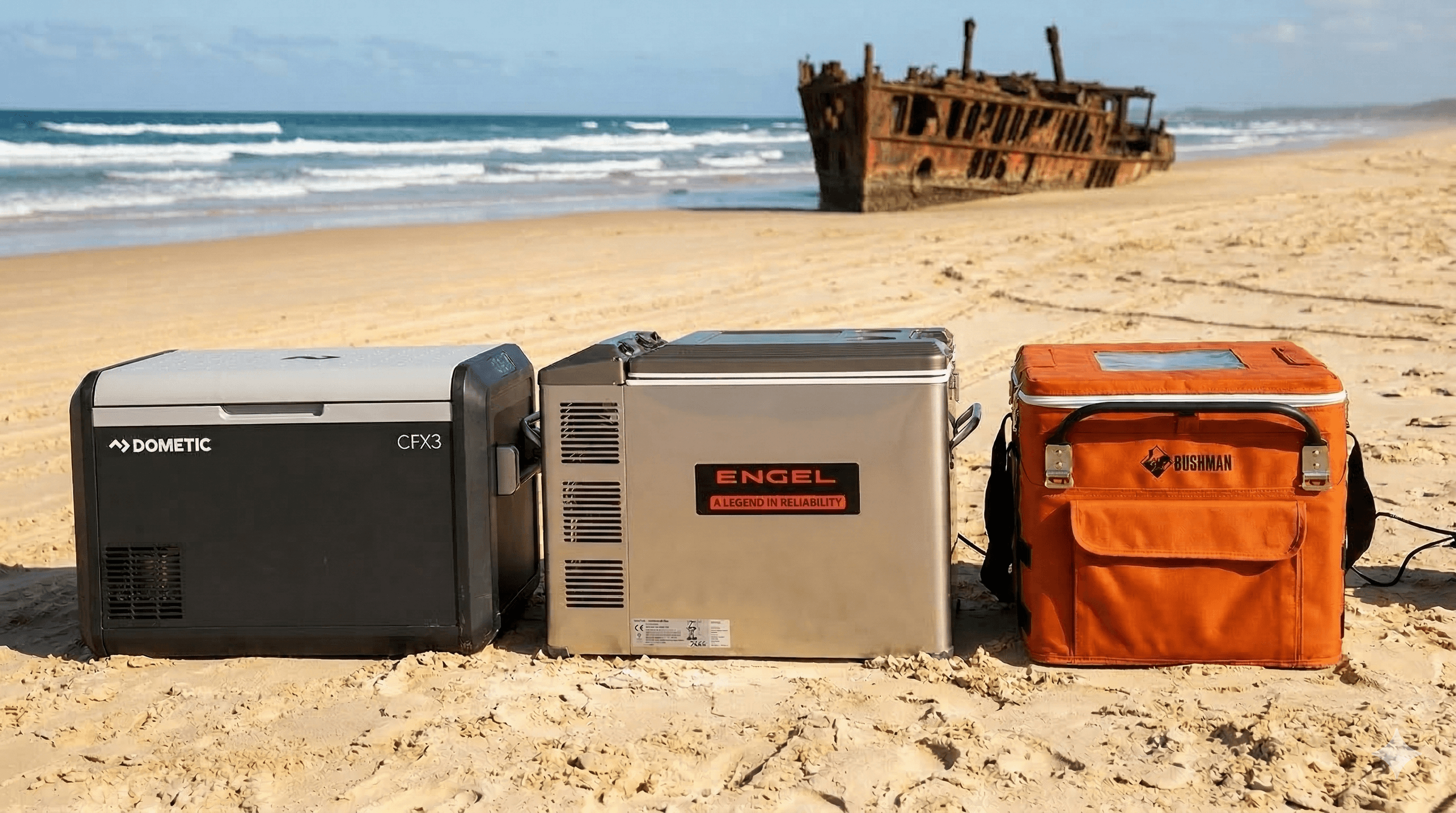
Best 12V Fridges Australia 2026: Tested & Rated
We tested 8 portable 12V fridges in Australian outback heat. Our honest picks for camping, 4WD touring, and van life after months of real-world testing.