Gibb River Road Gear Guide 2026: What to Pack for the Kimberley
The Gibb River Road is 660 kilometres of unsealed outback between Derby and Kununurra in Western Australia's Kimberley region. It's remote, corrugated, and river crossings are part of the deal. When you're hours from the nearest town and phone signal, the gear you bring isn't optional — it's the difference between a trip of a lifetime and a very expensive rescue.
This guide covers everything you need to pack for the Gibb River Road, based on multiple trips through the Kimberley. Every item earns its place.
Vehicle Preparation
The Gibb will punish an underprepared vehicle. Before you even think about camping gear, get the 4WD sorted.
Recovery Gear
You will encounter soft sand, rocky river crossings, and bog holes after rain. Carry proper recovery gear — no shortcuts.
- MAXTRAX MKII recovery boards — the single most used recovery item on the Gibb. Sand, mud, river exit ramps — they handle it all.
- Snatch strap (9,000-11,000 kg rated) and two bow shackles
- High-lift jack plus a base plate for soft ground
- Air compressor — you'll be airing down to 22-26 psi on corrugations and re-inflating for bitumen sections
- Tyre repair kit (plug kit plus patches)
Spares and Tools
- Two full-size spare tyres — one puncture is likely, two is not uncommon
- Spare fuel filter, fan belt, and radiator hoses
- Basic tool kit — spanners, pliers, cable ties, duct tape, wire
- Jerry cans — carry enough fuel for 600 km minimum. Fuel stops at Mt Barnett and Imintji are unreliable and expensive.
The Gibb River Road is only open during the dry season (May to October). Many river crossings are impassable in the wet. Check road conditions on the Main Roads WA website before departure and carry a current Hema Explorer map or HN7 navigator — phone maps won't work without signal.
Camping and Shelter
Nights in the Kimberley are warm and dry during the season, but you still need proper shelter from dust, dew, and the occasional surprise shower.
Shelter Options
A rooftop tent is ideal for the Gibb — it gets you off the rocky, uneven ground and sets up in minutes after a long day of driving. If you prefer ground-level, a quality canvas swag handles the dust and dew well.
Sleep System
Nights in the dry season range from 10-25°C depending on the month and elevation. A lightweight sleeping bag rated to 5°C covers you for June-July cold snaps. In September-October, a sleeping bag liner is often enough.
Shade and Comfort
An awning attached to your roof rack is essential — midday sun in the Kimberley is relentless. Add a couple of quality camping chairs and a compact camp table. You'll be spending long afternoons at gorges and swimming holes.
Kitchen and Food
You're self-sufficient for stretches of 3-5 days between any form of resupply. Plan your food carefully.
The Fridge
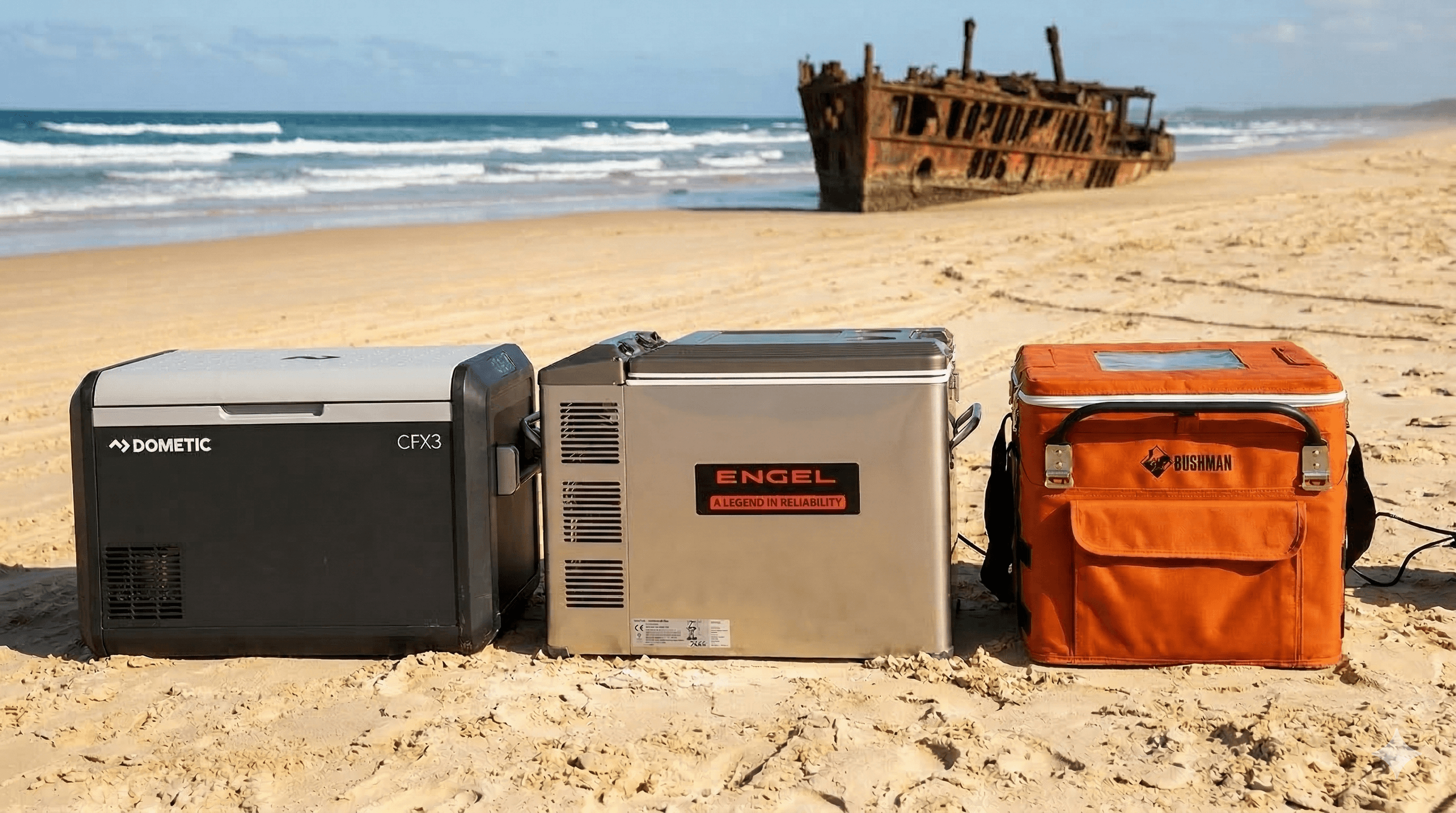
A 12V compressor fridge is non-negotiable. The Dometic CFX3 55IM ($1,599) with its 55-litre capacity handles a week's worth of food for two. See our full 12V fridge reviews for other options.
Cooking
A reliable two-burner camp stove and a 4 kg gas bottle will see you through the trip. Carry a backup single-burner as well. Wind can be fierce at exposed campsites, so a windscreen for your stove is worth packing.
Water
This is critical. Carry 60-80 litres of water minimum — a mix of fixed tanks and jerry cans. Top up at every opportunity. A water filter lets you safely filter from rivers and springs, extending your supply.
Pre-cook and freeze meals before leaving. Frozen meals in your 12V fridge double as ice packs for the first few days and mean less cooking on dusty, tired evenings. Wraps, canned goods, and dehydrated meals fill the gaps.
Power and Communication
There is no mains power and no mobile reception for most of the Gibb River Road. Your power and communication setup needs to be completely self-sufficient.
Solar and Battery
Portable solar panels are essential. The Kimberley gets exceptional sun — a 200W portable panel keeps your battery and devices charged with ease. Pair it with a quality portable power station or a dual-battery system in the vehicle.
Satellite Communication
A Garmin inReach Mini 2 ($599) is the most important safety device you'll carry. It provides two-way satellite messaging and SOS functionality anywhere on the planet. When you're 200 km from the nearest town with no phone signal, this is your lifeline.
UHF Radio
A quality UHF radio (Channel 40 for general use, Channel 10 for 4WD convoys) lets you communicate with other travellers, get updates on road conditions, and call for help at river crossings. A handheld unit works, but a vehicle-mounted unit with an external aerial gives much better range.
Safety and First Aid
First Aid Kit
Carry a comprehensive first aid kit — not a $15 chemist special. Include:
- Snake bite bandages (multiple compression bandages)
- Burns dressings and antiseptic
- Prescription medications (enough for twice the expected trip duration)
- Blister treatment for hiking into gorges
- Electrolyte sachets — dehydration is a real risk
Other Safety Essentials
- Headlamp — at least one per person, plus spare batteries
- Fire extinguisher — mounted and accessible in the vehicle
- Sunscreen (50+) and broad-brim hats — the Kimberley sun is brutal
- Dry bags for river crossings — keep electronics, documents, and sleeping gear protected
Budget Breakdown
Here's a realistic gear budget for a well-equipped Gibb River Road trip (excluding the vehicle itself):
| Category | Budget Range |
|---|---|
| Recovery gear (boards, straps, compressor) | $500 - $900 |
| Spares and tools | $300 - $600 |
| Extra fuel capacity (jerry cans) | $150 - $300 |
| Rooftop tent or swag | $800 - $3,000 |
| Sleeping bag and bedding | $150 - $400 |
| 12V fridge | $800 - $1,600 |
| Camp stove and kitchen gear | $200 - $500 |
| Water storage (60-80L) | $100 - $250 |
| Solar panel and power | $400 - $1,200 |
| Satellite communicator | $500 - $600 |
| UHF radio | $80 - $400 |
| First aid and safety | $100 - $250 |
| Total | $4,080 - $10,000 |
Many of these items are one-time purchases that you'll use on every trip. If you're already set up for 4WD touring in Australia, you likely already own most of this gear.
Like this guide? Get more every Friday.
Join 5,000+ outdoor enthusiasts.
Final Thoughts
The Gibb River Road is one of the best 4WD tracks in Australia for good reason — the gorges, swimming holes, and sheer scale of the Kimberley are unforgettable. But it rewards preparation and punishes shortcuts. Invest in proper recovery gear, carry more water and fuel than you think you need, and bring a satellite communicator. Do that, and you'll have the trip of a lifetime.
Frequently Asked Questions
Do I need a 4WD for the Gibb River Road?
How long does it take to drive the Gibb River Road?
Is there fuel on the Gibb River Road?
Do I need to book campsites on the Gibb River Road?
What's the best time to drive the Gibb River Road?
Written by
Adam La Cioppa
Lifelong 4WD tourer and van lifer who has explored Australia from coast to outback. Sharing real-world gear advice from the road.
You Might Also Like
Best Recovery Gear for 4WD Australia 2026: Essential Kit
The recovery gear that could save your trip — or your life. We've tested and rated the essential 4WD recovery equipment every off-roader needs in Australia.
Best 12V Fridges Australia 2026: Tested & Rated
We tested 8 portable 12V fridges in Australian outback heat. Our honest picks for camping, 4WD touring, and van life after months of real-world testing.
10 Best 4WD Tracks in Australia for 2026
From the Gibb River Road to the Simpson Desert, these are Australia's best 4WD tracks. Difficulty ratings and tips from someone who's driven them all.